

Intermittent fasting for women is not a single protocol – it’s a moving target shaped by where you are in your cycle, your life stage, and your body’s stress load on any given week. The popular 16:8 that works beautifully for your male colleague can quietly disrupt ovulation, elevate cortisol, and leave you exhausted by day three of the luteal phase.
The good news: the biology is not a barrier. Once you understand why your hypothalamus treats an extended fast differently than a man’s does, you can build a fasting schedule that works with your hormones instead of against them.
Your Hormonal Blueprint: Why Women React Differently to Fasting
Female hormones don’t just respond to what you eat – they respond to how much energy your brain thinks is available, moment to moment. At the center of that surveillance system is a neuropeptide called kisspeptin, produced in the hypothalamus, whose entire job is to read the room: do we have enough fuel to support a pregnancy this month?
Think of kisspeptin as the gatekeeper standing between your energy status and your reproductive axis. When fuel is plentiful, kisspeptin signals the hypothalamus to release GnRH – gonadotropin-releasing hormone – which then tells the pituitary to fire off LH and FSH, the hormones that drive ovulation and sustain estrogen and progesterone production. When kisspeptin senses an energy shortfall, it goes quiet. And when it goes quiet, that entire downstream cascade slows with it.
The chain looks like this: a prolonged or severe energy deficit causes cortisol to rise, which suppresses kisspeptin production. Less kisspeptin means reduced GnRH release. Reduced GnRH means a downstream drop in LH and FSH. And lower LH and FSH means the ovaries produce less estrogen and progesterone. According to research published in Nature Reviews Endocrinology, peripheral metabolic signals – leptin, insulin, ghrelin – are sensed directly by hypothalamic Kiss1 neurons, which modulate kisspeptin release and, in turn, the entire GnRH-LH-FSH axis. A separate study in Frontiers in Endocrinology confirmed that reduced leptin and insulin during energy deficit down-regulates kisspeptin, diminishing GnRH pulse frequency and LH output. The electrophysiological evidence – showing that kisspeptin directly depolarizes GnRH neurons – is detailed in a Endocrinology paper from 2022.
This isn’t a design flaw. It’s an evolution-preserved survival circuit – the body deprioritizes reproduction during perceived famine to keep you alive. The same GnRH-kisspeptin circuit that protected our ancestors from wasting resources on a pregnancy during a food shortage is the reason a hard fast can feel like picking a fight with your own biology.
Dr. Matthew S. Stone, PhD, an active researcher in kinesiology and dietary physiology, put it plainly:
“Fasting-induced reductions in kisspeptin can disrupt gonadotropin-releasing hormone (GnRH) pulsatility, potentially affecting the entire hypothalamic–pituitary–gonadal (HPG) axis… even relatively short fasting or intermittent restriction reduces hypothalamic KiSS1 expression in estrogen-primed females, attenuates luteinizing hormone (LH) pulses, and advances or disrupts estrous cyclicity, underscoring the susceptibility of the female reproductive axis to negative energy balance when estrogen is present.”
That last phrase is the critical qualifier: when estrogen is present. This vulnerability is tied specifically to the cycling years – and it’s dose-dependent.
Mild, time-limited fasting does not automatically flip the reproductive “off” switch. The intensity and duration of the fast matter, as do your baseline stress load, sleep quality, and overall health. And here’s where the popular narrative starts to outrun the actual data: much of the most alarming fear – the image of estrogen crashing from a skipped breakfast – originates from mechanistic reasoning and rodent studies, not from measurements taken in living, healthy women. Researcher Krista Varady, one of the most cited scientists in human intermittent fasting research, stated directly: “Much of the negative information on intermittent fasting reported has come from studies on mice or rats.”
In one controlled human trial, after eight weeks of a 4- or 6-hour eating window, researchers found no significant change in estrogen or testosterone levels. The theoretical alarm is frequently overstated – at least for otherwise healthy women following moderate protocols.
That said, the mechanism is real, and it has a specific timing problem that most fasting advice completely ignores.
The Luteal Phase Trap: Why 16:8 Fails So Many Women
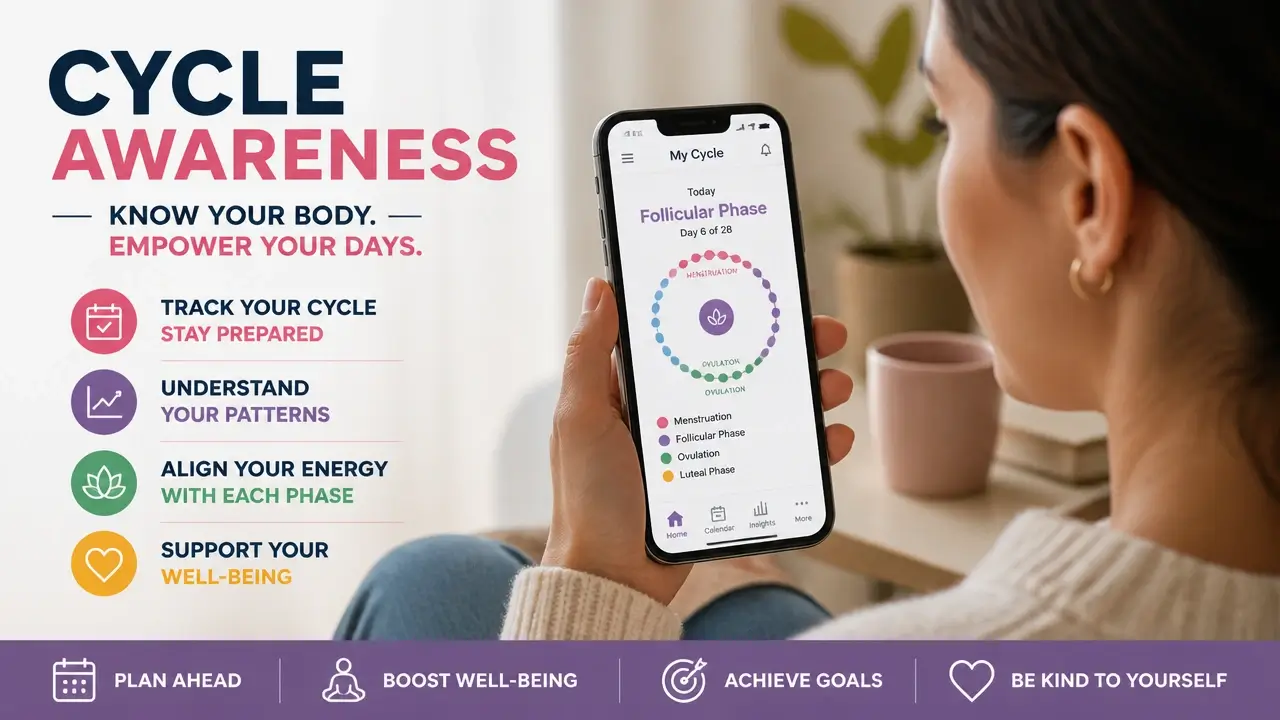
A rigid daily 16:8 schedule treats every day of your cycle as identical – and that’s exactly where it breaks down. Your menstrual cycle runs through four distinct hormonal environments, and the energy demands and stress reactivity of each one are genuinely different.
Here’s the rough map: the follicular phase (roughly days 1–10) is characterized by rising estrogen and a relatively stable cortisol baseline. Ovulation (days 11–14) is defined by an LH and estrogen surge – a precise, fragile hormonal event. The early luteal phase (days 15–20) sees progesterone take over as the dominant hormone. And the late luteal or pre-menstrual phase (days 21 through the start of your period) is where progesterone peaks and then drops, glucose demand increases, and the hypothalamic-pituitary-adrenal (HPA) axis becomes noticeably more reactive to stress.
That last window is where the 16:8 problem concentrates. Progesterone raises your core body temperature, increases your brain’s demand for glucose, and makes your HPA axis more sensitive. An extended fast during this window doesn’t just ask your system to go without fuel – it asks it to go without fuel at the moment it needs the most. The cortisol response to that fast is disproportionately higher in the late luteal phase than in the follicular phase. Over time, that pattern can contribute to disrupted sleep, ravenous hunger in the evenings, mood crashes, and – if sustained – cycle irregularity.
The standard internet 16:8 ignores this biology completely. It doesn’t know what day of your cycle it is, and it doesn’t care. When that 16-hour fast overlaps with days 21–28, it meets your body’s moment of greatest energy need with maximum energy restriction.
Here’s a preview of how to map fasting to your cycle instead: follicular is the safest window for standard fasting; ovulation calls for a very light 12–13 hours to protect the LH peak; early luteal allows moderate fasting if you feel stable; and late luteal is the one phase where intentional intermittent fasting should stop entirely, replaced by a minimum 12-hour eating window that allows dinner, a pre-bed snack if needed, and breakfast the next morning.
The full protocol is in the next section. But first, a critical honesty check.
Despite the strong physiological rationale for luteal-phase caution, there is a real evidentiary gap here: cortisol has never been systematically measured in healthy cycling women across a full menstrual cycle under different fasting lengths. Every expert agrees that late luteal is the highest-risk window. But no study has yet quantified whether cortisol rises by 10% or 100% in that window under a 14-hour versus 16-hour fast. The advice to stop fasting in late luteal is reasonable and precautionary – it is not yet proven with hard numbers. That gap makes honest self-tracking not just useful but essential.
Dr. Jing-Jie Chang, PhD, a leading researcher in reproductive physiology and endometrial biology, highlighted the stakes of that energy supply question from a different angle:
“Proper glucose metabolism is critical for the profound physiological changes in the endometrium entering the receptive state… We highly suspect that this pregnancy failure may be due to reduced GLUT1-mediated glucose metabolism, resulting in a decrease in endometrial receptivity caused by an inadequate energy supply and synthesis of substrate.”
The endometrial lining doesn’t just need hormones – it needs glucose-derived energy to function properly. Restricting that supply at the wrong moment in the cycle isn’t a neutral act.
Here’s a visual breakdown of where in the cycle that timing risk lives:
Cycle-Synced Fasting: Your Week-by-Week Protocol
The cycle-synced approach isn’t complicated – it’s just a fasting schedule that moves with your hormones instead of against them. Here’s how to apply it phase by phase.
The table below maps each phase’s hormone profile to a practical fasting window recommendation:
| Cycle Phase | Days (Approx.) | Dominant Hormones | Recommended Fasting Window |
|---|---|---|---|
| Follicular | Days 1–10 | Rising estrogen | 14:10 or 16:8 as tolerated |
| Ovulation | Days 11–14 | LH + estrogen surge | 12–13 hours maximum |
| Early Luteal | Days 15–20 | Progesterone rising | 12–14 hours if energy is stable |
| Late Luteal / Pre-Menstrual | Days 21–Period | Progesterone peaks, then drops | No intentional fasting; minimum 12-hour eating window |
During the follicular phase, estrogen is building and cortisol is naturally more stable. This is your best window for standard fasting. A 14:10 is a comfortable starting point; if you’ve been fasting a while and feel good, 16:8 is reasonable here.
At ovulation, the LH surge that triggers egg release is a precise, sensitive event. Keep your fast short – 12 to 13 hours – to avoid any cortisol interference with that peak. This isn’t the week to push your window.
The early luteal phase is a judgment call. If your energy, mood, and sleep feel stable, moderate fasting between 12 and 14 hours is permissible. If you notice any sleep disturbance, irritability, or unusual hunger, drop back to a 12-hour baseline without hesitation.
Late luteal is the non-negotiable. No intentional intermittent fasting. Maintain a minimum 12-hour eating window that allows a real dinner, a pre-bed snack if your appetite asks for one, and breakfast the next morning. This protects the progesterone-driven endometrial buildup and keeps cortisol from compounding the HPA reactivity that’s already elevated in this phase.
This is a starting template, not a rigid prescription. The most powerful tool you have is biofeedback. If you feel wired-tired at night, hungry at unusual hours, or your cycle starts shifting in length, shorten your fasting window – even in the follicular phase. Your cycle is giving you real-time data that no protocol can replicate.
Practically speaking: use a period-tracking app to know which phase you’re in at any given time. For women with irregular or absent cycles due to PCOS, hypothalamic amenorrhea, or perimenopause, default to a conservative 12–13 hour fast daily and prioritize re-establishing cycle regularity before experimenting with longer windows.
Dr. Alisa J. G. Smith, PhD, a specialist in metabolic health and sports nutrition for women, framed the clinical rationale for this flexibility well:
“From a clinical and applied standpoint, this supports the notion of moving toward cycle-aware, but not rigidly ‘cycle-synced,’ strategies: for most healthy, well-nourished women, modest phase-dependent adaptations-such as ensuring adequate energy and micronutrient intake in the mid-luteal phase… may help stabilize glycemic control, ovulatory function, and symptom burden.”
Cycle-aware, not rigidly cycle-synced. That’s the right mental model. You’re not chasing a perfect schedule – you’re staying awake to what your female hormones are telling you each week.
Julia Zumpano, a registered dietitian at Cleveland Clinic, put the underlying philosophy plainly: “It’s not that women shouldn’t try intermittent fasting ever. It’s that they’ll be better off if they tread lightly.” Shorter windows, more listening, less rigidity – that’s what the clinical consensus actually looks like.
Before and After Menopause: The Rules Change
Intermittent fasting for women doesn’t follow the same script after the cycling years end. The hormonal logic shifts, the risks redistribute, and for many women in midlife, fasting becomes a more accessible – and potentially more valuable – tool. But the research picture is thinner here than the confident advice online might suggest.
Perimenopause and Postmenopause: A Shifting Hormonal Foundation
Perimenopause and postmenopause are not the same hormonal state, and the distinction matters for how you approach fasting. Perimenopause is a years-long transition – estrogen fluctuates unpredictably, cycles become irregular, and insulin resistance typically increases. Postmenopause is the stable period after 12 consecutive months without a period, when ovarian estrogen production has nearly halted and the cycle-driven hormonal peaks and troughs are gone.
That distinction changes the central reproductive risk argument. The GnRH-kisspeptin circuit’s primary role was protecting a monthly ovulatory event. Once ovulation has stopped entirely, the fear of triggering hypothalamic amenorrhea through fasting becomes largely moot. The body is no longer running that monthly program, so there’s no monthly event for an extended fast to disrupt.
For perimenopausal women who still ovulate – however irregularly – the cycle-synced approach still applies as much as possible. But when cycles are unpredictable, defaulting to a gentle 12–13 hour window is the safer baseline.
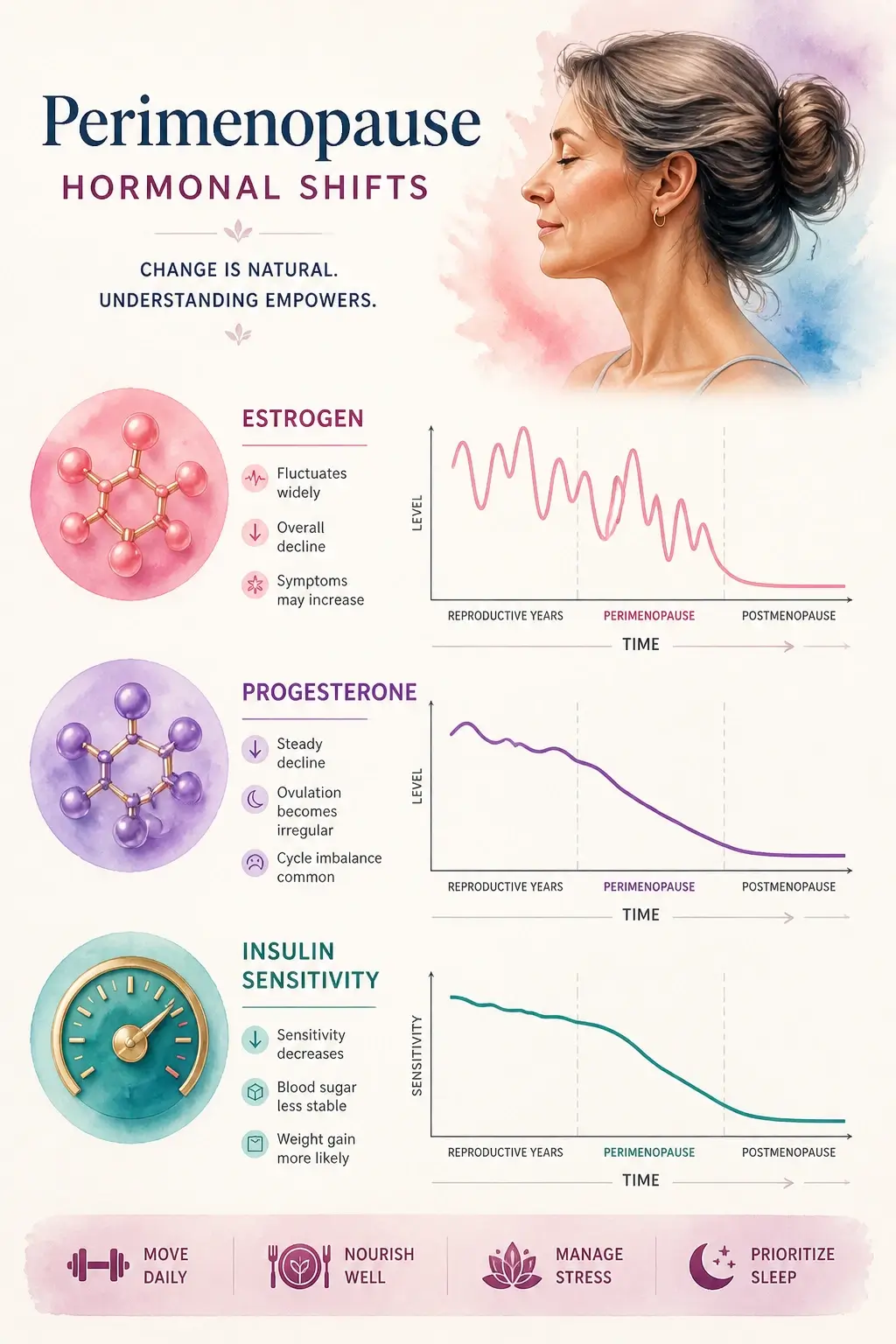
Time-Restricted Feeding in Midlife: Benefits, Cortisol, and Where to Start
Time-restricted feeding makes a strong metabolic case for itself in the menopausal transition – perhaps more so than at any other life stage. Estrogen’s loss removes a significant layer of insulin-sensitizing protection, which is one reason visceral fat accumulation, systemic inflammation, and cardiometabolic risk all climb after menopause. Consistent time-restricted eating can directly counteract those estrogen-loss-driven metabolic shifts, making it a genuinely useful tool for midlife health.
That said, cortisol doesn’t retire at menopause. Extreme protocols – OMAD, 20-hour fasts, aggressive caloric restriction within the eating window – can still provoke sleep disruption, worsen hot flushes, and elevate nighttime cortisol in menopausal women. A moderate 12–14 hour fast remains the recommended starting point for most. The metabolic benefits don’t require heroic fasting windows to materialize.
For women who have gone 12 consecutive months without a period, a consistent, moderate daily fasting schedule is a reasonable and sustainable approach – no longer needing to track cycle phases. For those still in the perimenopause transition with irregular cycles, the cycle-synced framework applies when possible, with a 12–13 hour default when cycle timing is unclear.
Here’s where intellectual honesty is required: no study has followed menopausal or postmenopausal women on any intermittent fasting protocol for more than six months. The questions about cumulative effects on bone density, long-term cortisol adaptation, and cardiovascular endpoints are completely unanswered. The early metabolic data is promising. Long-term guarantees don’t exist yet.
What the Evidence Actually Reveals (and Where the Gaps Are)
Intermittent fasting research in women is younger, smaller, and more nuanced than the headlines – in either direction – tend to acknowledge. Here’s what the human data actually shows, and where it runs out.
Human Trials Show No Catastrophic Hormone Collapse
The most widely circulated warnings – estrogen crashing, progesterone plummeting – are rooted primarily in mechanistic speculation and, in a number of cases, data from fasted rodents, not from measurements taken in healthy women. A handful of human clinical trials have directly measured female sex hormones during intermittent fasting, and these studies do not show the catastrophic hormonal collapse that consumer advice often describes.
In an 8-week University of Illinois Chicago (UIC) trial comparing 4-hour and 6-hour eating windows, DHEA decreased by roughly 14% but remained within clinically normal range, while estrogen, testosterone, and SHBG showed no significant change. Weight loss averaged about 3–4% of body weight. In a 6-month study of 76 pre-menopausal women with PCOS, a 6-hour eating window reduced free androgen index and testosterone, improved A1c, and led to roughly 10 pounds of weight loss – with 80% of participants willing to continue the protocol.
Science writer Tess Joosse, covering the PCOS study, summarized the finding directly: “The research shows that restricting eating to a six-hour daily window decreased testosterone without negatively affecting female hormones.”
That’s a meaningful signal. In a population where androgen excess is a core driver of symptoms, a fasting protocol that reduces androgens without suppressing estrogen is the opposite of what the fear narrative predicts.
Evidence Gaps That Keep the Guidance Honest
The evidence is still young, and the gaps are significant enough to warrant real humility in any recommendation. The longest published trial to date is six months. We have no data on whether the hormonal or metabolic changes observed early in a fasting protocol remain stable, attenuate, or reverse after a year or more. Long-term reproductive outcomes, bone density effects, and cardiovascular endpoints are entirely unknown.
Current research also treats “women” as a uniform block. No study has stratified participants by baseline cortisol, sleep quality, body composition, genetics, or menstrual phase. That means the evidence applies to an average that may not represent you – and it’s least likely to represent the women who are most at risk: those with high baseline stress, disrupted sleep, or pre-existing hormonal irregularity.
The cortisol measurement gap is particularly striking. Despite cortisol being central to every mechanistic argument about why fasting is risky for women, no study has directly measured cortisol across a full menstrual cycle during different fasting lengths. We don’t know the dose-response. We don’t know if a 14-hour fast produces a meaningfully different cortisol curve than a 16-hour fast in the late luteal phase. That’s a foundational question, and it remains unanswered.
Krista Varady, whose lab has produced some of the most rigorous human IF trials to date, has spoken directly about these evidence gaps and the need for longer-term research:
Safe Implementation: Contraindications, Red Flags, and Your Starting Point
Intermittent fasting for women can be safe and genuinely useful – but only when you respect the biology, honor clear contraindications, and treat your body’s distress signals as data, not inconvenience.
Absolute contraindications – stop here if any of these apply:
- Pregnancy or breastfeeding
- Active eating disorder or history of one
- Underweight (BMI under 18.5)
- Poorly controlled diabetes
- Diagnosed adrenal insufficiency or unmanaged thyroid condition
- Any period of high chronic stress – job loss, grief, illness, caregiving overload
These aren’t cautionary suggestions. They’re situations where the hormonal stress of fasting adds load to a system that’s already compromised.
For everyone else, the universal starting point is a 12-hour overnight fast – something like 7 pm to 7 am. Eat breakfast if you feel any morning fatigue. Do not skip it to extend the window. After several weeks of metabolic comfort and cycle stability, and only then, consider extending to 13–14 hours during the follicular phase.
The eating window itself matters as much as its length. Energy deficit is a hormonal stressor independent of fasting. If you compress your eating window but don’t eat enough total calories, protein, and healthy fats within it, you’ve created the same kisspeptin-suppressing energy shortfall that the protocol is designed to avoid. Sufficient total energy, adequate protein, and quality fats are non-negotiable inside the window.
Stop-sign symptoms – pause fasting and reassess if you notice:
- Menstrual cycle that shortens, lengthens, or disappears
- Waking up wired between 2 and 4 am
- Noticeable hair thinning or brittleness
- Uncharacteristic adult acne
- Persistent, unexplained exhaustion
- Weight-loss stall accompanied by rising irritability or brain fog
Any one of these is your HPA axis telling you the current protocol is creating more stress than it’s resolving. The response is to shorten the fasting window, not push through.
Finally: work with a healthcare provider who understands female hormone physiology – not just general nutrition. Sleep quality, stress management, and adequate nutrition are the foundation. Intermittent fasting is the accent piece. It can be a powerful one, but it doesn’t hold the structure up on its own.
Key Takeaways on Intermittent Fasting for Women
- Kisspeptin, not estrogen itself, is the first domino – energy deficit suppresses it, and the entire reproductive hormone cascade slows downstream.
- The luteal phase, especially days 21 through your period, is the highest-risk window for fasting; this is when cortisol reactivity and glucose demand peak together.
- Human trials show no catastrophic estrogen collapse from moderate fasting – DHEA dropped 14% in one UIC trial, but estrogen, testosterone, and SHBG held steady.
- After menopause, the reproductive safety-switch argument weakens significantly, but extreme protocols can still elevate cortisol and worsen sleep or hot flushes.
- The longest human IF trial in women is six months – long-term bone density, cortisol, and cardiovascular outcomes remain completely unstudied.
- A 12-hour overnight fast is the safe universal starting point; extend only after weeks of stable cycles, good sleep, and adequate energy intake within the window.
Frequently Asked Questions About Intermittent Fasting for Women
Does intermittent fasting negatively affect female hormones?
Moderate fasting protocols don’t show catastrophic hormonal changes in human trials – the UIC study found no significant shift in estrogen, testosterone, or SHBG after 8 weeks of a 4- or 6-hour eating window. The risk is real but dose-dependent: extreme protocols, inadequate caloric intake within the window, or fasting during the late luteal phase create the conditions where hormonal disruption becomes more likely.
What’s the difference between fasting risks for cycling versus postmenopausal women?
Cycling women carry a specific risk that postmenopausal women don’t: the kisspeptin-GnRH circuit is actively protecting a monthly ovulatory event, so energy deficit can disrupt that cycle. Once ovulation stops permanently, that reproductive safety-switch argument largely disappears – though cortisol and sleep disruption from extreme protocols remain relevant at any age.
Can intermittent fasting lower A1c?
Yes – a 6-month study of pre-menopausal women with PCOS using a 6-hour eating window showed improved A1c alongside reduced free androgen index and roughly 10 pounds of weight loss. The mechanism is improved insulin sensitivity driven by time-restricted eating, but results vary based on what and how much you eat within the window.
Is fasting a good approach if you have PCOS?
The PCOS data is actually among the most encouraging in the female IF literature – a 6-hour eating window reduced testosterone and free androgen index without suppressing estrogen, and 80% of participants wanted to continue the protocol. That said, women with PCOS often have irregular cycles, which makes cycle-syncing difficult; a conservative 12–13 hour daily window is a safer starting point than aggressive restriction.
Is fasting okay if you have Hashimoto’s or a thyroid condition?
Poorly controlled thyroid conditions are listed as an absolute contraindication because the HPA axis is already under metabolic strain, and adding fasting stress can worsen hormonal instability. If your thyroid is well-managed and stable, a conservative 12-hour overnight fast may be tolerable – but this is a conversation to have with the clinician managing your thyroid, not a self-directed experiment.
How do you know if fasting is disrupting your hormones before it becomes a serious problem?
Your cycle is the earliest warning system. A cycle that shortens, lengthens, or becomes irregular is the first measurable sign that reproductive hormone signaling is under stress. Earlier soft signals include waking wired between 2–4 am, unexplained hair thinning, and a weight-loss stall paired with irritability – any of these warrants shortening your fasting window before the disruption deepens.
Can you do intermittent fasting while trying to conceive?
Trying to conceive is not an absolute contraindication, but it demands extra caution – especially during the ovulatory and luteal phases, when the hormonal environment for egg release and implantation is most sensitive. A 12-hour overnight fast during the follicular phase is the most that most fertility specialists would consider reasonable; most would recommend pausing any intentional fasting entirely until pregnancy is confirmed.
Does the time of day you eat within the fasting window matter as much as the window length?
It matters more than most fasting advice acknowledges. Eating most of your calories earlier in the day aligns with your body’s circadian insulin sensitivity peak, meaning the same calories eaten at 7 am are metabolized more efficiently than at 9 pm. For women in the late luteal phase especially, having a real dinner and not skipping breakfast is more important than hitting a precise fasting hour count.
References
- Metabolic regulation of kisspeptin – the link between energy balance and reproduction – pubmed.ncbi.nlm.nih.gov
- The Role of Kisspeptin in the Control of the Hypothalamic-Pituitary-Gonadal Axis – pmc.ncbi.nlm.nih.gov
- Metabolic Impact on the Hypothalamic Kisspeptin-Kiss1r System – pmc.ncbi.nlm.nih.gov
- Dietary Restriction and Intermittent Fasting in Female Reproductive Health (Stone et al., MDPI Nutrients) – mdpi.com
- Glucose Metabolism in the Endometrium and Reproductive Outcomes (Chang et al., Frontiers in Physiology) – frontiersin.org
- Cycle-Aware Nutritional Strategies for Women (Smith et al., MDPI Nutrients) – mdpi.com
- New Data on How Intermittent Fasting Affects Female Hormones – today.uic.edu
- Krista Varady Discusses Evidence Gaps in Intermittent Fasting Research for Women – youtube.com