
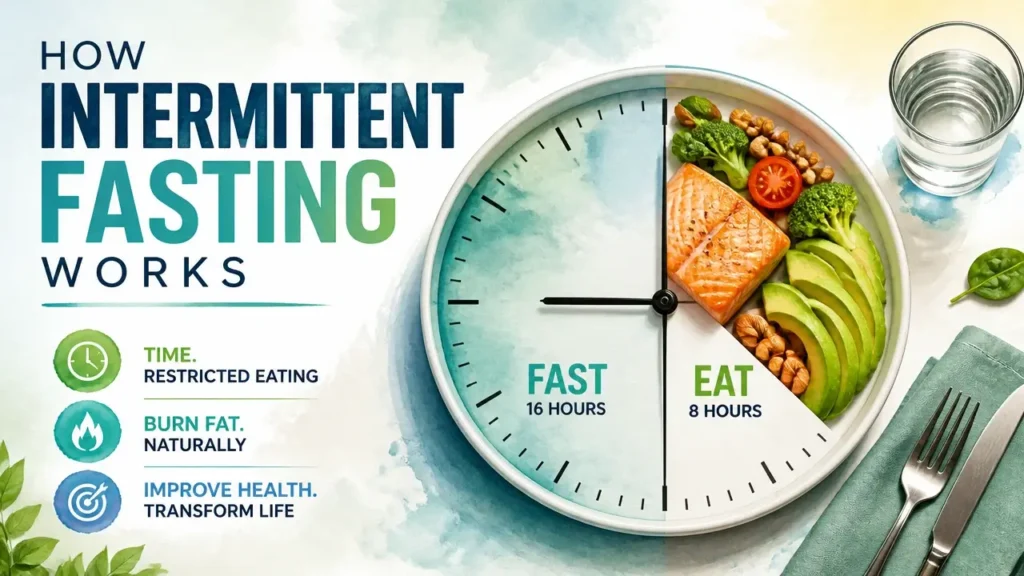
Intermittent fasting is a structured eating pattern that works by giving your body a predictable window without incoming fuel – long enough to exhaust blood glucose, drop insulin, and flip into fat-burning mode. It’s not a new invention. It’s a biological mechanism your body has always had, finally being studied with the rigor it deserves.
What makes IF worth understanding isn’t the weight-loss headlines. It’s the underlying metabolic logic – and knowing exactly where the solid evidence ends and the hopeful extrapolation begins.
What Intermittent Fasting Is (And Isn’t a Diet)
Intermittent fasting is a time-based eating pattern that cycles between defined periods of eating and voluntary periods of not eating – the focus is entirely on when, not on what foods to choose or how many calories to count. That single distinction separates it from virtually every traditional diet. Standard diets restrict the content of your plate; IF restricts the clock on your wall.
Here’s a concrete example that might surprise you: if you finish dinner at 7 PM and eat breakfast at 7 AM, you’ve already completed a 12-hour fast. No special protocol, no meal prep, no calorie spreadsheet. You did it by not raiding the kitchen after dinner.
This pattern isn’t a Silicon Valley invention. Cultures and religious traditions around the world have practiced extended periods without food for centuries – Ramadan, Yom Kippur, various monastic schedules. What’s changed is that modern science is now asking a more precise question: does the timing of eating, independent of what’s eaten, affect how the body functions at a cellular level?
The early answer appears to be yes – and the reason lives in what your body does with its fuel supply when food stops coming in. That’s the mechanism worth understanding first.
Here’s a brief explainer from Dr. Mark Mattson of Johns Hopkins, one of the researchers who helped bring IF into serious scientific conversation:
Your Body on a Fast: The Metabolic Switch
The metabolic switch – the body’s transition from burning glucose to burning fat – is the central biological event that makes intermittent fasting more than just skipping breakfast. Understanding it changes how you read every IF claim you’ll ever encounter.
Start with the fed state. When you eat a meal containing carbohydrates, your digestive system breaks them down into glucose. Insulin rises in response, escorting that glucose into cells for immediate energy. Whatever glucose isn’t used right away gets stored – first as glycogen in your liver and muscles, and then, when those stores are full, as body fat.
Now extend the gap between meals. After roughly 8 to 12 hours without food, glycogen stores run low. Insulin levels drop sharply because there’s no incoming glucose to manage. The body needs a new fuel source, and it turns to the one it’s been quietly stockpiling: stored fat.
The liver begins breaking down fatty acids through a process called beta-oxidation, producing molecules called ketones – primarily beta-hydroxybutyrate (β-OHB). The brain, which can’t run directly on fat, runs readily on ketones. So do muscles. This is the metabolic switch: the shift from a glucose-dependent system to a fat-and-ketone-dependent one.
As Mattson et al. (2018) describe in their peer-reviewed review in Obesity, the switch involves a three-phase sequence – glycogen depletion, insulin-glucagon ratio shift, and hepatic ketogenesis via the HMG-CoA synthase pathway – that typically begins somewhere between 12 and 24 hours of fasting, depending on your activity level and glycogen stores going in.
What makes this more interesting than simple calorie math: β-OHB isn’t just a fuel molecule. Research published in Cell Metabolism shows it also acts as a signaling molecule, inhibiting enzymes called histone deacetylases and upregulating protective genes – including BDNF, which supports brain cell survival. The StatPearls biochemistry review on ketogenesis confirms that the entire switch is hormone-driven: low insulin activates AMPK, reduces malonyl-CoA, and removes the brake on CPT-1, the enzyme that shuttles fatty acids into mitochondria for burning.
Dr. Mark P. Mattson, PhD, former Chief of the Laboratory of Neurosciences at the National Institute on Aging and Professor of Neuroscience at Johns Hopkins University School of Medicine, puts it plainly:
“The metabolic switch from glycogenolysis to gluconeogenesis, fat oxidation and ketogenesis seems to be one of the main drivers of the metabolic health benefits provided by IF… In this case, the metabolic switch is flipped during the following 12 h of fasting.”
This mechanism is real, well-documented, and not seriously contested. What is contested – and what you deserve to know upfront – is how far its benefits extend. The metabolic switch is confirmed biology. Claims that it prevents cancer, extends lifespan, or protects against neurodegeneration in humans are extrapolated from animal models and short-term biomarker studies. Not a single major institution – not Johns Hopkins, Harvard Chan School, Mayo Clinic, or UC Davis – can point to a randomized controlled trial with more than two years of follow-up showing that IF prevents disease or extends human life. Every long-term claim is inferred. That distinction will matter as we move through the evidence.
Fasting vs. Starvation: Why You’re Not Wasting Away
Starvation is the word most people reach for when they hear “16 hours without food” – and it’s the wrong one, for reasons that are grounded in exactly the mechanism we just covered.
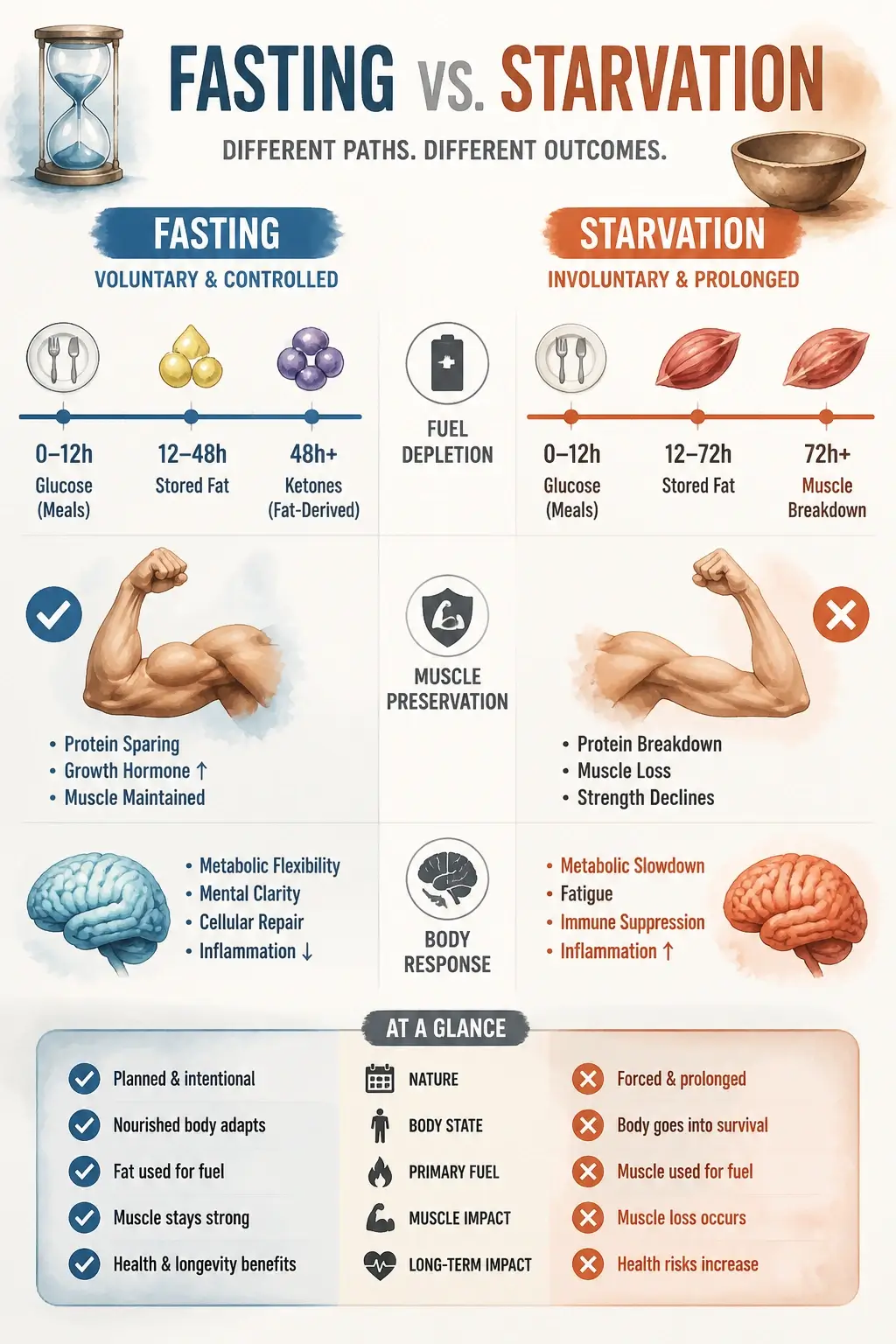
Starvation is involuntary, prolonged, and catastrophic. It’s what happens when the body exhausts not just glycogen but fat reserves too, and is forced to catabolize muscle tissue and eventually organs for energy. That’s a process that takes days to weeks of near-zero caloric intake. It ends in organ failure. It is not what happens between dinner and noon the next day.
Intermittent fasting is voluntary, time-limited, and followed by adequate nutrition. During a 12–16 hour fast, the body moves through glycogen depletion and into fat oxidation – exactly as described above. Muscle breakdown is minimal at this stage because the body has a full reservoir of stored fat to draw from first. The biological drive to preserve lean tissue is strong; muscle catabolism becomes significant only when fat stores are severely depleted, a state that requires prolonged, severe caloric restriction far beyond any standard IF protocol.
Here’s a practical way to hold the distinction: fasting is a scheduled rest for your digestive system, during which your body runs on its own reserves. Starvation is your body running out of reserves entirely.
One other variable worth naming: hydration. Hunger signals during a fast are sometimes thirst in disguise, and electrolyte balance matters. Water, mineral water, and unsweetened herbal teas support the fasted state without interrupting it. Neglecting hydration is one of the most common reasons early fasting feels worse than it needs to.
The visual below illustrates the physiological fork in the road between the two states:
Here’s a side-by-side look at how fasting and starvation diverge at the cellular level:
Dr. Jason Fung, MD, nephrologist, co-founder of the Intensive Dietary Management program, and author of The Obesity Code, draws the line clearly:
“Fasting is the voluntary abstinence from solid food and caloric beverages… In contrast, starvation is the involuntary absence of food. It is neither controlled nor voluntary… During fasting, the induction of protein sparing mechanisms… contributes to the preservation of muscle mass and function.”
The protein-sparing mechanisms Fung references are real and measurable. Growth hormone rises during fasting, which helps protect lean tissue. The body is not indifferent to its own muscle – it defends it, as long as fat stores remain available as an alternative fuel.
The Most Common Intermittent Fasting Schedules
Intermittent fasting schedules are not one-size-fits-all rhythms – each protocol creates a different fasting window depth, fits a different lifestyle, and carries its own trade-offs worth knowing before you commit. The three most studied are 12:12, 16:8, and 5:2.
The 12:12 is exactly what it sounds like: 12 hours of fasting, 12 hours of eating. Finish dinner by 7 PM, eat breakfast at 7 AM. For most people, this is already close to their natural overnight pattern – the main change is eliminating late-night snacking. It’s the gentlest entry point and the most realistic starting place for anyone new to structured fasting, because it requires the smallest behavioral shift.
The 16:8 – also called time-restricted eating – extends the fasting window to 16 hours, leaving an 8-hour eating window. A common pattern: first meal at noon, last meal finished by 8 PM. Most people achieve this by skipping breakfast. The longer fast creates a more sustained metabolic switch and a longer window of fat oxidation, which is why it’s the most widely discussed protocol.
The 5:2 operates on a weekly rather than daily structure: eat normally five days a week, and on two non-consecutive days restrict intake to roughly 500–600 calories. It’s not a daily fast – it’s a weekly rhythm that some people find easier to manage than daily time restriction.
One natural transition sentence before the comparison: here’s how the three schedules stack up across the dimensions that matter most for a beginner making a practical choice.
| Feature | 12:12 | 16:8 | 5:2 |
|---|---|---|---|
| Fasting Duration | 12 hours/day | 16 hours/day | ~36–40 hrs/week (2 low-cal days) |
| Eating Window | 12 hours | 8 hours | Unrestricted (5 days); ~500–600 kcal (2 days) |
| Example Schedule | 7 AM – 7 PM | 12 PM – 8 PM | Normal Mon/Wed/Fri/Sat/Sun; low-cal Tue/Thu |
| Calorie Restriction Required? | No | No | Yes, on fasting days |
| Best For | Beginners, habit formation | Fat adaptation, weight loss | Those who prefer weekly structure |
| Key Consideration | Closest to natural overnight fast | Mayo Clinic & Cleveland Clinic flag potential LDL elevation; discuss with doctor if cardiovascular risk exists | Requires managing hunger on two very low-calorie days |
There is no single “best” method here – only the one that fits your life well enough to sustain. What the table doesn’t show is a finding that most IF guides quietly skip: Mayo Clinic has flagged that a 16-hour fasting, 8-hour eating cycle may raise heart-disease risk compared with other time-restricted eating patterns. Cleveland Clinic separately reported that people following 16:8 for six months showed significantly elevated LDL cholesterol. This doesn’t mean 16:8 is dangerous for everyone – but it does mean anyone with existing cardiovascular risk factors should discuss it with a doctor before committing. The 12:12 carries no such institutional flag and remains the safest starting point for most beginners.
What Intermittent Fasting Can (and Can’t) Do for Your Health
The health claims around intermittent fasting range from solid to speculative, and most articles don’t tell you which is which. That’s the gap worth closing here.
Short-Term Wins: Weight Loss, Insulin, and Inflammation
Weight loss is the most consistently documented benefit of intermittent fasting, and the mechanism is less exotic than the marketing suggests. Restricting your eating to a defined window naturally reduces the number of opportunities you have to eat, which tends to produce a modest calorie deficit without deliberate counting. According to data reviewed by Harvard T.H. Chan School of Public Health, studies show average weight loss of approximately 0.32–0.5 kg per week – roughly half a pound – which is gradual, sustainable, and consistent with what you’d expect from a mild, sustained calorie reduction.
The insulin sensitivity story is closely linked. When insulin levels stay lower and more stable across the day – as they do when you’re not eating for 12–16 hours – cells become more responsive to insulin’s signal over time. Short-term studies show measurable drops in fasting insulin, which is a meaningful early marker for reduced type 2 diabetes risk.
Systemic inflammation is a third area with early supporting evidence. Fasting periods appear to lower circulating inflammatory markers – including CRP and certain interleukins – that are associated with cardiovascular disease and accelerated cellular aging. The mechanism likely involves reduced oxidative stress during the fasted state and the anti-inflammatory signaling properties of β-OHB mentioned earlier.
A fourth commonly reported experience – improved mental clarity and focus during the fast – is biologically plausible. The brain runs cleanly on ketones, which provide a steady, consistent fuel source compared to the glucose peaks and troughs that follow meals. Whether this translates to measurable cognitive improvement in long-term human trials is a different, still-open question.
The Evidence Hierarchy: What the Research Actually Supports
The evidence hierarchy for intermittent fasting is the lens that makes every future claim you encounter readable. Without it, you’re just collecting opinions.
Think of it in four tiers.
Tier 1 – Confirmed: short-term weight loss and drops in fasting insulin. Harvard researcher Courtney Peterson has noted that the weight loss from IF is functionally equivalent to about 250 calories per day less food – not magic, just eating less often. This is on par with standard calorie restriction.
Tier 2 – Probable: lower blood pressure and reduced inflammatory markers. The signals are consistent and biologically coherent, but large multi-year trials haven’t confirmed them as durable outcomes.
Tier 3 – Speculative: autophagy in humans, organ protection, extended lifespan, and preserved cognitive function. These are real phenomena in animal and cellular research – but the leap to human health outcomes over decades hasn’t been made. Autophagy, the cellular “cleanup” process that fasting appears to stimulate, has been observed in human cells, but no one has yet shown that stimulating it through IF reduces your risk of cancer or Alzheimer’s by a measurable amount over a lifetime.
Tier 4 – Contested: whether 16:8 raises cardiovascular risk, and whether the timing of eating matters independently of food quality. Johns Hopkins research emphasizes timing as a primary driver; Cleveland Clinic, University of Michigan, and UC Davis all insist that nutrient-dense whole foods are equally non-negotiable. The most honest synthesis: IF is a useful structure for meal timing, but it doesn’t offset a poor diet.
Knowing these tiers means you can evaluate the next supplement ad, wellness podcast, or clinical trial headline on your own – without needing someone to tell you what to think about it.
When Intermittent Fasting Is Off-Limits
Intermittent fasting carries a clear set of contraindications that every major health institution agrees on – and a few emerging concerns where the guidance is still catching up.
The absolute no-go groups are well established.
Pregnant and breastfeeding women require consistent caloric and nutrient intake to support fetal development and milk production – fasting is not appropriate here.
Children and adolescents are in active growth phases that demand reliable nutrition.
Anyone with a history of eating disorders or disordered eating faces real risk of relapse or reinforcement of harmful patterns; the structure of fasting can become a vehicle for restriction.
People with type 1 diabetes are at risk of dangerous hypoglycemia without food to balance insulin.
Anyone on medications that require food intake – including certain blood pressure drugs, metformin, and NSAIDs – should not fast without medical guidance on timing.
Cautionary groups require individualized evaluation rather than blanket avoidance. People with advanced type 2 diabetes on blood-sugar-lowering medications should only consider IF under close supervision, as the combination can cause hypoglycemia. Adults over 65, particularly those at risk of falls or with low muscle mass, should be assessed first – prolonged fasting can accelerate muscle loss in people who are already sarcopenic.
The universal recommendation across every major source is consistent: if you have any chronic condition or take regular prescription medication, speak with a healthcare professional before starting. Not as a formality – but because the interaction between fasting physiology and your specific medication or condition matters in ways a general article cannot account for.
Stop fasting and seek medical advice if you experience persistent dizziness, severe headaches, heart palpitations, or fainting. These are not “adjustment symptoms” – they’re signals worth investigating.
One gap in the official guidance is worth naming honestly: the research on how intermittent fasting affects women’s hormonal health – menstrual cycles, fertility, thyroid function – is thin across all major institutions. Cleveland Clinic lists perimenopause as a consideration, but no source provides concrete guidance. This doesn’t mean women can’t practice IF safely, but it does mean female readers should monitor their energy, mood, sleep, and cycle regularity carefully, especially in the first month. Starting with 12:12 rather than 16:8 is a prudent choice until you know how your body responds.
The Endocrine Society, the professional medical organization specializing in endocrinology and metabolism, draws a clear boundary:
“Fasting for more than 72 h should not be undertaken without medical supervision… Pregnant or lactating women, people with a history of eating disorders, and type 1 diabetics should avoid fasting without strict medical supervision.”
IF is a useful tool. It is not a mandatory protocol. Your health is not worth compromising to follow a schedule.
Your First Week on Intermittent Fasting
The adjustment period is real, predictable, and temporary – and knowing what to expect in the first week is the difference between pushing through a normal biological transition and giving up on something that might have worked.
Plan for two to four weeks before the new eating pattern feels natural. The first five to seven days are typically the hardest. Your body is recalibrating its hunger signals, which are partly governed by ghrelin – a hormone that rises on your habitual meal schedule, not just when you’re genuinely low on fuel. Those 7 AM hunger pangs aren’t a sign you need food; they’re your body asking where breakfast went.
Common temporary side effects include hunger pangs, mild headaches, irritability, low energy, and stomach rumbling. These are normal signs of metabolic adjustment, not damage. They typically fade significantly after the first week as ghrelin rhythms shift and fat oxidation becomes more efficient.
The zero-calorie rule during the fasting window trips up a lot of beginners. Anything that contains calories – milk, cream, sugar, juice, bone broth, protein shakes, even “bulletproof” coffee – breaks the fast metabolically. It provides substrate for insulin to respond to, which interrupts the fasted state. Water, unflavored sparkling water, plain black coffee, and unsweetened herbal teas are safe and encouraged. Staying hydrated genuinely reduces the intensity of hunger and headaches during the fasting window.
Here’s what that looks like in practice:
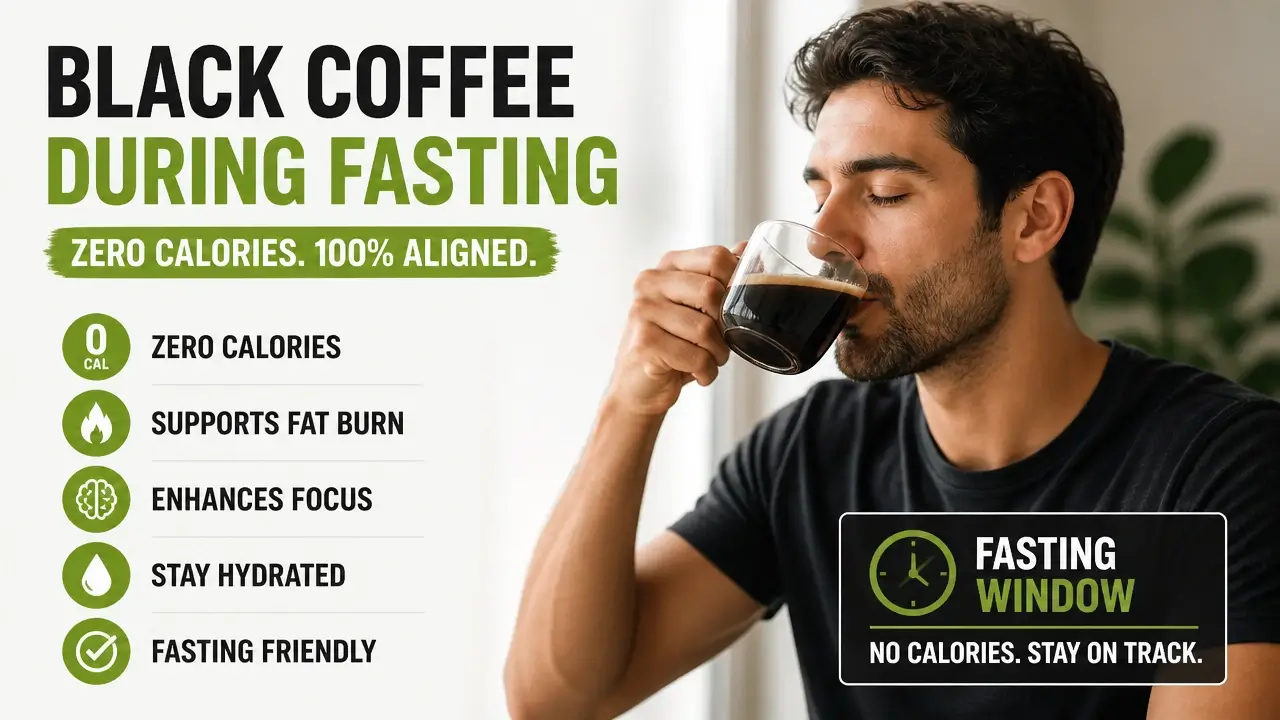
A question that comes up constantly: Does a splash of cream in my coffee really ruin everything? Technically, yes – it provides enough calories to prompt an insulin response that interrupts the metabolic switch. In practice, if your goal is weight loss rather than strict autophagy research, a very small amount (under 50 calories) may be a workable compromise that keeps you consistent. But for the cleanest metabolic signal, zero calories is the standard.
When the eating window opens, how you break the fast matters. A nutrient-dense meal with adequate protein, fiber, and healthy fats will support satiety and prevent the energy crash that comes from spiking blood sugar after a prolonged fast. Breaking a 16-hour fast with a large bowl of refined carbohydrates is a reliable way to feel terrible by mid-afternoon.
What the major institutions don’t address – and what most beginners actually struggle with – is the practical friction: what to do when a social dinner falls outside your eating window, whether exercising fasted is safe for muscle preservation, or how to handle hunger that disrupts sleep. The honest answer is that the science doesn’t yet provide prescriptive guidance for these scenarios. Success depends on self-awareness and iteration. The best fasting schedule is one you can adapt to your actual life – not one that makes you miserable or socially isolated.
The Buchinger Wilhelmi Clinic, one of the world’s most clinically experienced fasting institutions, notes:
“During the fasting period, only specific beverages are permitted, including unlimited water, unsweetened black coffee or tea… The combination of mineral supplements significantly decreased self-reported physical response of starvation, with tolerable hunger-mediated sensations… with the body adjusting within a few weeks.”
The mineral supplement observation is worth taking seriously. Sodium, magnesium, and potassium losses increase during fasting. If headaches and fatigue persist beyond day three, electrolyte balance is the first place to look.
Choosing Your Path: Method Differences and Gender Considerations
Intermittent fasting works through one mechanism but offers multiple entry points – and the right one depends on your biology, your schedule, and how much adjustment friction you’re willing to absorb in the first month.
All three protocols covered here – 12:12, 16:8, and 5:2 – are valid starting points, each representing a different depth of fasting commitment. The 12:12 builds the habit with minimal disruption; it’s the gentlest way to prove to yourself that you can tolerate a fasting window and still function. The 16:8 extends fat adaptation and creates a longer daily window for the metabolic switch, but it also introduces more hunger, more adjustment time, and the cardiovascular consideration flagged by Mayo Clinic and Cleveland Clinic that makes it worth discussing with a doctor if you have any lipid or heart health history. The 5:2 sidesteps daily discipline entirely but demands two genuinely low-calorie days per week, which requires its own form of planning and hunger management.
The trade-offs are real and individual. Longer daily fasts may accelerate fat adaptation but aren’t universally tolerable. Weekly fasting days offer flexibility but don’t produce the consistent overnight metabolic switch that daily protocols create. A full decision framework – comparing these protocols across goals, lifestyles, and health histories – is the subject of a dedicated follow-up article.
The gender dimension deserves more than a footnote. Emerging evidence and clinical observation suggest that women’s bodies may be more sensitive to prolonged fasting due to how the hypothalamus regulates energy balance in relation to reproductive hormones. Some women thrive on 16:8 with no disruption to their cycle; others find it elevates cortisol, disrupts sleep, or alters their menstrual rhythm. This is not a blanket warning against IF for women – it’s a call for closer self-monitoring and a lower starting threshold. Research published in Frontiers in Nutrition reinforces the point:
“In non-obese mice, the effectiveness of the 5:2 diet was sex-dependent… Men and women may respond differently to intermittent fasting… reinforcing the need for integrative and sex-specific approaches when evaluating protocols.”
Animal data, yes – but consistent with what clinicians are observing and what the human evidence base hasn’t yet caught up to explain.
The honest position at the edge of current science: no long-term randomized trial has identified which IF protocol is best for which person over a decade. The entire expert conversation is built on short-term signals and reasonable biological inference. That’s not a reason to dismiss IF – the short-term mechanisms are real and the benefits are measurable. But it does mean that personalization, self-monitoring, and a conversation with your healthcare provider aren’t optional extras. They’re the actual methodology.
Now that you understand the biology, the evidence tiers, and the safety boundaries, the question that remains is the one only you can answer: which schedule fits your week, your body, and your life well enough to actually sustain? That’s exactly what the next article in this series will help you work out.
Key Takeaways on Intermittent Fasting
- Intermittent fasting restricts when you eat, not what – the benefit comes from the metabolic shift that happens during the fasting window, not deprivation.
- After roughly 8–12 hours without food, glycogen depletes, insulin drops, and the body switches to burning stored fat and producing ketones for fuel.
- A 12–16 hour fast does not cause muscle wasting; starvation metabolism only activates after fat stores are significantly depleted, which takes days of near-zero intake.
- Short-term benefits – weight loss, lower fasting insulin, reduced inflammation – are well-supported; claims about longevity, autophagy, and organ protection in humans remain speculative.
- Several groups should not fast without medical supervision: pregnant or breastfeeding women, children, people with eating disorder histories, and those with type 1 diabetes or food-dependent medications.
- No single protocol is universally best – the right method is the one you can sustain without compromising health, and the choice is worth discussing with a healthcare provider.
Frequently Asked Questions About Intermittent Fasting
Does fasting from 7 PM to 7 AM actually count as intermittent fasting?
Yes – a 12-hour overnight fast is a legitimate and well-recognized IF protocol called 12:12. If you finish dinner by 7 PM and don’t eat until 7 AM, you’ve completed it without any special effort beyond skipping late-night snacks.
What’s the real difference between a 12-hour and a 16-hour fast?
The 12:12 keeps you near the glycogen-depletion threshold, while 16:8 pushes you deeper into fat oxidation and ketone production for a longer daily window. The trade-off is more hunger, a longer adjustment period, and an institutional flag from Mayo Clinic and Cleveland Clinic linking 16:8 to potential LDL elevation in some people.
How do I do intermittent fasting without losing muscle?
During a 12–16 hour fast, muscle breakdown is minimal because the body preferentially burns fat first. Eating adequate protein during your eating window – roughly 1.6–2.2 g per kg of body weight – and maintaining resistance exercise are the two variables that protect lean mass most reliably.
Can I drink anything during the fasting window?
Water, plain black coffee, unflavored sparkling water, and unsweetened herbal teas are all permitted and encouraged. Anything containing calories – including milk, cream, juice, or sweetened drinks – interrupts the metabolic switch by triggering an insulin response.
Will intermittent fasting fix my insulin resistance?
Short-term studies show measurable drops in fasting insulin and improved insulin sensitivity, particularly in people with early insulin resistance. It’s a promising tool, but if you’re managing type 2 diabetes with medication, any fasting protocol needs medical supervision to avoid hypoglycemia.
Does intermittent fasting affect women differently than men?
The research is genuinely thin here, but emerging evidence and clinical observation suggest women may be more sensitive to prolonged fasting due to hormonal regulation of energy balance. Some women experience menstrual disruption on 16:8; starting with 12:12 and monitoring cycle regularity, energy, and mood is the prudent approach.
Is the “autophagy boost” from fasting real?
Autophagy – the process by which cells break down and recycle damaged components – does appear to be stimulated by fasting in human cells. What hasn’t been shown in human trials is whether stimulating it through IF translates to measurable reductions in cancer risk, neurodegeneration, or longevity. It’s real biology; the health-outcome claims are still speculative.
Can intermittent fasting cause more harm than good for some people?
Yes, for specific groups. People with eating disorder histories, type 1 diabetes, those on food-dependent medications, pregnant or breastfeeding women, and children face real risks. Even in generally healthy adults, persistent dizziness, heart palpitations, or severe headaches during fasting are signals to stop and consult a doctor – not push through.
References
- Flipping the Metabolic Switch: Understanding and Applying Intermittent Fasting – pmc.ncbi.nlm.nih.gov
- Biochemistry, Ketogenesis – ncbi.nlm.nih.gov
- Intermittent Fasting – nutritionsource.hsph.harvard.edu
- Intermittent Fasting – dietdoctor.com
- Frontiers in Nutrition: Sex-Specific Responses to Intermittent Fasting – frontiersin.org